Church doesn't have to be complicated. Mostly when people think of church, they think of the more complicated versions. Weekly Sunday services - with musicians and singers, a minister who prepares and preaches a sermon, pews and notices and morning tea and children's programs - then of course youth groups, women's groups, charity programs, small group networks.... and when you've done it one week you start organising the next one. Imagine starting a church like this! I know some people who have and it's a huge process that requires a lot of time, vision, planning and clever people, not to mention a pastor with serious credentials (ministry qualifications, years of experience etc). Most of us would never imagine that we could do something like this. Even many pastors, like myself.
But church doesn't have to be that complicated. Church is not the programs and preaching and preparation of all this stuff. Church is people. If you boil it down to its simplest ingredients, church is a group of people who are following Jesus together, looking after each other and making a difference in the world. This might involve weekly sermons, services and staff, or it could just be a handful of people who catch up in a park every couple of weeks to chat, eat food and encourage each other. That's what our church looks like. Maybe you could start one like this too.
It's called a simple church, and there are more and more of these popping up all over the place. One of the advantages of keeping church simple like this (and there are many!) is that many more people can actually do it. Like running a mobile coffee van instead of a 3-Star Restaurant. If you can get people together and find some content that helps you centre around Jesus, you can probably lead a simple church. And there's a huge amount of great content out there. Through my organisation, OurPathway, I can even plug you into some great support for simple church leaders. Information, resources, stories, a network of people with a range of different simple churches.
How good would it be if there was one of these simple churches on every street? People who are living out Jesus' way of life, bringing heaven into their local communities, and sharing countless stories of what God is doing in all those different places. If you've wondered about something like this before, don't let that idea go! If you don't fit in with the more complicated versions of church, or if you are frustrated with it for some reason, then do something about it! Keep praying, and check out www.OurPathway.com, and start some conversations with your friends about it. And if you want to chat more about it all, let me know and we can have a coffee together.
Right throughout the history of the church, it has been simple groups of Jesus followers who have changed the world. From Jesus' own handful of disciples to the house churches in Acts to the early fathers, small groups of nuns, and wild Celtic monks who transformed whole nations. God has always used simple, unsensational, behind-the-scenes, slowly-growing groups for his powerful, life-changing work. Like yeast in dough, or a tiny seed in the ground. Maybe you could be one of those seeds. And even if that's still not you, please pray for more people who will do it!
Showing posts with label church. Show all posts
Showing posts with label church. Show all posts
Monday, 8 June 2015

Monday, 28 April 2014
How to Change the World With Fruit Punch
I have some interesting conversations in my work as a highschool chaplain. Yesterday I had a good one with one of the teachers at school about cultural differences. It came about because she wanted to support the chaplaincy program by putting on a morning tea and inviting the other teachers. For me that would have meant buying some bikkies and cordial and cracking out the plastic cups; for her it meant treating us all to a feast, with home-baked cakes and Anzac bikkies, exotic fruit platters, lamingtons, secret-family-recipe fruit punch, and so on.... My one job was to provide a table, and my contribution gradually looked more and more pitiful the more food she brought out.
"This is amazing!" I said, as she thinly sliced some limes to place in each glass. "You've done this before."
"Oh, you obviously didn't know that I'm married to a Samoan," she explained. "This is every Sunday for me." And she went on to tell me about some of the other differences between our cultures.
One part of the conversation that particularly stood out to me was when she talked about how they do funerals. In Samoan culture - or at least where her family is from - family and close friends come from all over to stay with the bereaved family, to be with them, help them grieve, support them, cook for them, look after kids, help them talk through the pain and share stories of life shared and lost. Not just for a week though. This could go on for months, she said. And there's no polite avoidance of the painful topics. In her family, people will doggedly persist with the hard questions until they're honestly answered and then can be worked through together. By the time everyone has gone home, the bereaved family is well-and-truly working through their grief and learning to live again despite their loss. It's the responsibility of the oldest in the family to be there until everyone else has gone, however long that takes.
This comes as quite a contrast when compared with how the western world typically operates. Yes it's messier, yes it's more complicated (imagine 20 people living in your house for a month!), yes it's in-your-face, bare-your-soul honest - but as this teacher talked all I could think was "This sounds a lot like Jesus." When I read the gospel stories, I feel that Jesus' home culture seems more like Samoa than America or England.
If you were to use only a few words to describe the way of life that Jesus showed to his disciples, "hospitality" would have to be one of those words. Take Easter for example. On Easter Sunday Jesus beat death for all time, forever altered history by guaranteeing the awesome hope of the gospel, and became the king of the universe. And then he returned to spend a little more time with his followers. Everything had changed, and Jesus now had all the power in the universe at his disposal. What would he do? What would he show his disciples? What would he tell them to do? If you read the stories, it's a little underwhelming how it played out. Jesus had a meal with his disciples. He walked along a road chatting with some confused friends, then joined them for dinner at their place. He went fishing with his mates, and cooked breakfast for them on the beach. Ordinary, everyday things, simple things, hospitality things - the kinds of things he'd been doing with them all along.
Everything had changed on a cosmic, eternity level. But on the practical, everyday, human level the plan was still the same. God was communicating to us "These simple things really are important. Just keep doing what I showed you!" Share life together, eat together, walk together, laugh together, grieve together, learn together, and help more people to do the same.
It's not rocket science. But Jesus knew that simple things like this really do have the power to change the world. So may we take some cues from our Samoan friends, and from Jesus himself, and learn to live our lives with more and more depth and generosity, honesty and compassion... and more lime-garnished glasses of secret-family-recipe fruit punch.
"This is amazing!" I said, as she thinly sliced some limes to place in each glass. "You've done this before."
"Oh, you obviously didn't know that I'm married to a Samoan," she explained. "This is every Sunday for me." And she went on to tell me about some of the other differences between our cultures.
One part of the conversation that particularly stood out to me was when she talked about how they do funerals. In Samoan culture - or at least where her family is from - family and close friends come from all over to stay with the bereaved family, to be with them, help them grieve, support them, cook for them, look after kids, help them talk through the pain and share stories of life shared and lost. Not just for a week though. This could go on for months, she said. And there's no polite avoidance of the painful topics. In her family, people will doggedly persist with the hard questions until they're honestly answered and then can be worked through together. By the time everyone has gone home, the bereaved family is well-and-truly working through their grief and learning to live again despite their loss. It's the responsibility of the oldest in the family to be there until everyone else has gone, however long that takes.
This comes as quite a contrast when compared with how the western world typically operates. Yes it's messier, yes it's more complicated (imagine 20 people living in your house for a month!), yes it's in-your-face, bare-your-soul honest - but as this teacher talked all I could think was "This sounds a lot like Jesus." When I read the gospel stories, I feel that Jesus' home culture seems more like Samoa than America or England.
If you were to use only a few words to describe the way of life that Jesus showed to his disciples, "hospitality" would have to be one of those words. Take Easter for example. On Easter Sunday Jesus beat death for all time, forever altered history by guaranteeing the awesome hope of the gospel, and became the king of the universe. And then he returned to spend a little more time with his followers. Everything had changed, and Jesus now had all the power in the universe at his disposal. What would he do? What would he show his disciples? What would he tell them to do? If you read the stories, it's a little underwhelming how it played out. Jesus had a meal with his disciples. He walked along a road chatting with some confused friends, then joined them for dinner at their place. He went fishing with his mates, and cooked breakfast for them on the beach. Ordinary, everyday things, simple things, hospitality things - the kinds of things he'd been doing with them all along.
Everything had changed on a cosmic, eternity level. But on the practical, everyday, human level the plan was still the same. God was communicating to us "These simple things really are important. Just keep doing what I showed you!" Share life together, eat together, walk together, laugh together, grieve together, learn together, and help more people to do the same.
It's not rocket science. But Jesus knew that simple things like this really do have the power to change the world. So may we take some cues from our Samoan friends, and from Jesus himself, and learn to live our lives with more and more depth and generosity, honesty and compassion... and more lime-garnished glasses of secret-family-recipe fruit punch.
Monday, 14 October 2013
Women and the Church
I recently had the pleasure of being the guest speaker at another church, and in conversation with one of the elders afterwards (while sipping the usual Nescafé Blend 43 and eating an iced vovo) I discovered that they don't allow women to preach. Now before I go any further, it's worth making a very strong note that I am not going to lay out what I think on the matter in this very short article, nor give a theological treatise on the topic. My intention is just to open up the topic, so that you intelligent readers can have the conversations, because I believe it's an important conversation to have.
Now a few observations. First, without going into any of the details, it needs to be said that the culture in first century Palestine where the church first started is not the same as the culture of 21st Century Australia. With that in mind, the answers the New Testament church came up with to various questions (including this one) may not always fit as snugly in our world today. Whatever answers we come up with today (to any of the "how to" questions) need to reflect both the way of Jesus and the needs of our own culture. I'll leave you to nut that one out.
Secondly, it might be worth pointing out that women feature much more in the New Testament than people usually suppose. Jesus' official twelve disciples may have been men, but there were also at least a handful of key women who seem to have been very supportive of Jesus - some scholars even suggest they may have been providing financial support to his missions.
Now look at the conversations. Through the gospels on almost every occasion the general impression is that most people - including the twelve - basically had no idea of what Jesus was on about. Yet there are at least two significant recorded occasions where Jesus seems to be impressed that someone actually got what he was saying... both times with women (John 4, Mark 7).
Fast-forward to Good Friday, where all of his followers have run away in fear. Wait, all? No, not all.
"Some women were there, watching from a distance, including Mary Magdalene, Mary (the mother of James the younger and of Joseph), and Salome. They had been followers of Jesus and had cared for him while he was in Galilee. Many other women who had come with him to Jerusalem were also there." (Mark 15:40-41)
And they stayed with him, following when his body was taken down from the cross, to see where it would be placed. Then as soon as the sabbath ended and shops opened they purchased spices to prepare his body. Everyone knows the rest of the story. Sunday morning the women were there at the crack of dawn and were the first to discover that Jesus was alive - and not only that, but it seems they believed it before any of the men. They rushed back to tell the disciples (and where were the disciples? Hiding in a room). In the meantime, the resurrected Jesus thought it important to make a short stop off on his way back to the Father to have his first conversation, with who? Mary Magdalene. Read it again and notice how much women feature in this the climax of the story. In a male-dominated culture, what do you think this said?
It doesn't end with the gospels. In a culture filled with male leaders, the early church features a significant number of key women as well. At the end of his letter to the believers in Colossae, Paul writes, "Please give my greetings to our brothers and sisters at Laodicea, and to Nympha and the church that meets in her house." At the end of Romans: "I commend to you our sister Phoebe, who is a deacon in the church in Cenchrea. Welcome her in the Lord as one who is worthy of honor among God’s people. Help her in whatever she needs, for she has been helpful to many, and especially to me. Give my greetings to Priscilla and Aquila, my co-workers in the ministry of Christ Jesus. In fact, they once risked their lives for me. I am thankful to them, and so are all the Gentile churches. Also give my greetings to the church that meets in their home.... Give my greetings to Mary, who has worked so hard for your benefit." Women play significant roles and feature in prominent places right through the New Testament. It seems that the early church had no problems with women in influential roles.
What about your church? Does it show the significance of both genders in its organisation and leadership? Are there any "rules" in place (even unspoken ones) that might need to be reconsidered? Could your church benefit from some more feminine creativity?
Recently I've been hearing a fair bit about how previously male-dominated fields - such as science and technology - are discovering just how much women can add to the conversation. Personally I would like to see the church leading this charge, and benefitting just as much from the new and fresh ways of thinking that women can bring.
Over to you.
Thursday, 11 July 2013
The Four Spaces of Belonging
Here's something I've found helpful for thinking about mission, networks, relationships and community: The Four Spaces of Belonging. The ideas come from Joseph Myers' book "The Search to Belong," about the ways that people connect. And here they are....
First there is the Public Space. This is a large-scale shared experience, where you feel you are part of a great number of people on the same wavelength, but you are still free to remain anonymous if you choose. E.g. A shared worship experience in a big church, a footy game, a movie theatre, a forum for Commodore or Mac owners, St Paddy's Day...
First there is the Public Space. This is a large-scale shared experience, where you feel you are part of a great number of people on the same wavelength, but you are still free to remain anonymous if you choose. E.g. A shared worship experience in a big church, a footy game, a movie theatre, a forum for Commodore or Mac owners, St Paddy's Day...
Next is Social Space. This is where we cluster around a common interest or focus (e.g. a BBQ, local pub, workplace, school event, party or function). Here you connect on a superficial level, sharing snapshots of yourself - who I am, what I enjoy, where I live, where I work... This is a natural space to be introduced to new people, ideas, invites - a great springboard to the other spaces.
A little more intimate is our Personal Space. This is a smaller group of our friends and family, close work colleagues, mums group, etc. Here we know each other well and share more privately, reflect together on faith, share our lives, pray for one another, care for one another. Jesus had this connection with his twelve disciples.
And finally there is our Intimate Space. This is only shared with a few people - our spouse and one or two close friends. These people know us as we really are - the good and the ugly. In this space we feel safe and secure to share the naked truth about ourselves, what we think, what we struggle with - the deepest parts of ourselves. Jesus shared some things only with his closest friends - Peter, James and John.
The idea is that healthy community is a combination of all of these spaces, not just the deep, intimate ones. So you're in danger if you're connecting in the public space but not anywhere more personal. And you're also missing out if you connect in deep intimate relationships but avoid larger settings where you might run in to new people.
Churches have tended to view the deep, personal settings (like accountability groups, one-to-one discipleship and mentoring) as the places where spiritual growth happens and so have worked to push people towards the inner spaces. Myers calls us to value each of the four spaces equally and recognise that God is active in shaping us at every level.
A little more intimate is our Personal Space. This is a smaller group of our friends and family, close work colleagues, mums group, etc. Here we know each other well and share more privately, reflect together on faith, share our lives, pray for one another, care for one another. Jesus had this connection with his twelve disciples.
And finally there is our Intimate Space. This is only shared with a few people - our spouse and one or two close friends. These people know us as we really are - the good and the ugly. In this space we feel safe and secure to share the naked truth about ourselves, what we think, what we struggle with - the deepest parts of ourselves. Jesus shared some things only with his closest friends - Peter, James and John.
The idea is that healthy community is a combination of all of these spaces, not just the deep, intimate ones. So you're in danger if you're connecting in the public space but not anywhere more personal. And you're also missing out if you connect in deep intimate relationships but avoid larger settings where you might run in to new people.
Churches have tended to view the deep, personal settings (like accountability groups, one-to-one discipleship and mentoring) as the places where spiritual growth happens and so have worked to push people towards the inner spaces. Myers calls us to value each of the four spaces equally and recognise that God is active in shaping us at every level.
Wednesday, 10 July 2013
Our Church: Small and Simple
If we can't fit in a home, we'll start another group.
Small, simple groups have many advantages over big congregations (which is why big congregations work hard to get everyone into a small group!). Here are just a few....
Community. It's easier in a small group to get to know the other people, do life together, and look out for each other. Small is easier for food and conversation. Small groups grow community more naturally – you don't have to work so hard on community; the struggle is trying to avoid it! You can't go unnoticed in a small group - you are involved whether you like it or not. Small church becomes like a family or team more easily than an organisation.
Simplicity. Practically, small, simple churches have many advantages over more complicated ones. They are much easier to start up, sustain and adapt. Many more people could run a home group than could run a big church, which means we could potentially grow many more churches by using simple church thinking. Pastors of big churches have to be extraordinary. The bigger the church, the more exceptional the pastor must be, and if a pastor finishes up, it can take months to find someone else for the role. Simple churches, on the other hand, can be run by more everyday people, because there are no teams, programs, strategies, administration, services, sermons or staff to worry about. Any problems can be worked out by the group together, with extra wisdom from outside experts wherever needed. And small groups are much more flexible if changes are required. These are some of the reasons why simple church expressions might be an effective way forward for the church in Australia.
Mission. This flexibility means that small churches can more easily reflect the surrounding culture, work their way into existing communities and influence them from the inside out. Smaller groups can connect more individually with people outside the church, although this generally happens more slowly. Jesus compared the kingdom of heaven to a mustard seed, which slowly grows into a not-particularly-large weed-like bush that is very difficult to get rid of and tends to pop up all over the place.
Large churches with many ministries require many people to keep them running, and the best church members gradually spend more and more of their time on the church community (services, home groups, playgroups, music teams, camps, leadership, youth/men's/women's/children's ministry and so on) - which can sometimes lead to spending less time with the non-church people in their life. Simple church recognizes that everyone is already a part of various communities (work, school, uni, mums groups, sports teams) and we try to encourage members to connect with the people in these communities better, to be Jesus where they already are.
Our church has only one official get-together a week, so as to make room for real life: dinners, coffees, BBQs, sports, picnics, family days, school prayer groups, fishing, community festivals, watching the footy, and so on....
Discipleship. Churches have for many years recognised that discipleship happens best in small group settings where there is space for conversation. People grow at different rates and God is doing something different in everybody's life, and the best discipleship adapts to these changes as they come. A small group conversation allows for personal questions (try sticking your hand up during a sermon to clarify something or offer a different perspective!) and provides the space to relate Jesus' message and way of life to people's individual lives - to their particular work setting, family environment, personality, skill set and to their own dreams for the world.
There are just a few to whet your appetite.
Small, simple groups have many advantages over big congregations (which is why big congregations work hard to get everyone into a small group!). Here are just a few....
Simplicity. Practically, small, simple churches have many advantages over more complicated ones. They are much easier to start up, sustain and adapt. Many more people could run a home group than could run a big church, which means we could potentially grow many more churches by using simple church thinking. Pastors of big churches have to be extraordinary. The bigger the church, the more exceptional the pastor must be, and if a pastor finishes up, it can take months to find someone else for the role. Simple churches, on the other hand, can be run by more everyday people, because there are no teams, programs, strategies, administration, services, sermons or staff to worry about. Any problems can be worked out by the group together, with extra wisdom from outside experts wherever needed. And small groups are much more flexible if changes are required. These are some of the reasons why simple church expressions might be an effective way forward for the church in Australia.
Mission. This flexibility means that small churches can more easily reflect the surrounding culture, work their way into existing communities and influence them from the inside out. Smaller groups can connect more individually with people outside the church, although this generally happens more slowly. Jesus compared the kingdom of heaven to a mustard seed, which slowly grows into a not-particularly-large weed-like bush that is very difficult to get rid of and tends to pop up all over the place.
Large churches with many ministries require many people to keep them running, and the best church members gradually spend more and more of their time on the church community (services, home groups, playgroups, music teams, camps, leadership, youth/men's/women's/children's ministry and so on) - which can sometimes lead to spending less time with the non-church people in their life. Simple church recognizes that everyone is already a part of various communities (work, school, uni, mums groups, sports teams) and we try to encourage members to connect with the people in these communities better, to be Jesus where they already are.
Our church has only one official get-together a week, so as to make room for real life: dinners, coffees, BBQs, sports, picnics, family days, school prayer groups, fishing, community festivals, watching the footy, and so on....
There are just a few to whet your appetite.
Saturday, 6 July 2013
Rain, gluey kids and simple church
I don't know if you've ever tried to have a conversation with someone in the middle of a kids festival before. Strangely enough I've found myself in this situation quite a few times - twice even in the last week. The first time wasn't planned though. It was meant to be a relaxing conversation with a friend at the peaceful Powerhouse cafe overlooking the Brisbane River. Turned out the Powerhouse was in the middle of their big school holiday festival. Look out for it next time if you've got primary-aged kids. Give it a miss if you want a quiet conversation. And maybe check the weather too, like we didn't.
Still, in between dodging little kids with gluey hands and trying to stop the rain from diluting our cappuccinos, we managed to have a conversation worthy of the cheerleader tag. The gentleman I met with has been involved in starting a simple church group over the last year or so. When I say "simple church" I mean it doesn't have organised services or paid staff. It's a small group of people who are keen to follow Jesus and are flexible in how that might look for them. Actually, sometimes I wonder if "simple" might be a bit misleading. My church lately has been having quite a few of our Jesus conversations in amongst rain and gluey kids.
The group that my Powerhouse friend belongs to call themselves "The Assembly of Grapes," which in itself is telling.
There are a few of these around and they all look different depending on the people in the group. One of the key aims of Postcard Radio (the people I work with) is to find these simple church groups and support them however we can. It can feel lonely in these small groups sometimes, especially for leaders. It's a different way of operating than the normal church way and sometimes you can feel like a bit of a lone ranger. There are a lot of people on this journey though, and some really good ideas are being tried and experimented with. We'd like to help pass around some of these ideas and stories if we can.
If you are in a simple church group in QLD, please let us know! We'd love to know what groups are around - so we can support and encourage the groups and facilitators, and also to help individuals connect in with some of these like-minded people.
On a different note to finish, here's something that stuck in my head from my rain-soaked friend last week: "I think that much of the time the church is answering questions that the community isn't asking. We need to spend more time listening to people. Like the catholic priest who started out his ministry by setting up a couple of chairs at the local shopping centre, and just sat there. Most of the time he sat by himself, but when some crisis events happened people were lining up to talk."
Listen to your neighbourhood, like Michael Frost talked about in the last video I posted. Sit there. Have the coffees. Get amongst the families and kids. Find out the questions people are really asking.
Thursday, 4 July 2013
Listen to your neighbourhood!
Here's a clip well worth a watch. Michael Frost talking about mission in the neighbourhood.
Tuesday, 4 June 2013
Feeling Guilty About the Crusades
Every Friday afternoon during the last period of the school week I find myself helping out in a year 8 class discussing history. I assist this entertaining group of students a few times each week (one of the various things I do as a chaplain), but for some reason Friday afternoon history is my favourite.
Last week as the lesson began I learned that the topic they were learning about was the Crusades. A brief explanation in case you were doodling and passing notes in year 8 history....
As per my recently refreshed knowledge thanks to Mrs Caple, the Crusades were religious wars fought by Christians against (mostly) Muslims between the 11th and 16th centuries with the aim to recover Jerusalem and the surrounding area ("the holy land"). Jerusalem was important to both sides for religious reasons. The Pope kicked it off, the Catholic Church repeated the call and the kings dutifully led their armies out (at this point the Catholic Church had a huge amount of power, even and especially with the monarchy). Several hundred thousand soldiers responded, some for glory, some for adventure, and many for more basic reasons: they would be fed. It was a violent and dark time in history, and the "Christian" church were the main perpetrators.
As the lesson began - well aware that my chaplain hat was unavoidably atop my noggin - I thought to myself "This could be awkward."
As a pastor and as a Christian I've had many conversations with non-Christian folk where I've tried to explain how good and worthwhile Christianity is - how great it would be and what an amazingly different world we'd have if more people lived Jesus' way.
"Well, what about the Crusades then?" people have replied. That was a time in history, they point out, where entire nations were "Christian" and yet took it upon themselves to slaughter everyone else (not just Muslims). It's a pretty crushing response and it's been very difficult in these conversations to find anything else to say. Even though it was hundreds of years ago in a medieval world, I've felt a fair bit of guilt over this dark part of history.
There has been a lot of church-bashing going on in the last few decades and the Crusades is one of the more well-worn blunt instruments.
Recently at a pastors conference that I attended, one of the speakers (who'd had similar conversations with his buddies) encouraged us to take the humble approach: although it wasn't us fighting those wars, we need to own up to it and just wear it because we wear the Christian name. (Similar to how our prime minister Kevin Rudd said sorry to all indigenous Australians on behalf of... who exactly?)
I think humility is definitely the right course of action whatever we do, but I also believe that in this instance that answer might actually prove to be a little unhelpful. Here's an illustration....
This week the Australian Rugby League State of Origin is on, for which I'm a very proud Queensland supporter. Suppose that in a club somewhere on Wednesday night a drunken fight breaks out over a dodgy ref's call and a QLD supporter leaves a NSW fan in a coma. Should I then hang my head in shame for the rest of my life because like that drunken thug I also support Queensland?
Or suppose it was discovered that during the world wars of last century one of the secret Nazi organisations devoted to wiping out the "inferior" races was code-named World Vision. Should today's World Vision aid organisation hang its head in shame and wear the wrongs of that Nazi group?
Or suppose someone was to steal my identity and then under my name start up a crack-dealing crime syndicate. Should I then go and apologise to anyone who's affected? "It was all done under my name. I'm so sorry for ruining your life. I'm heading to the cops now so they can lock me away." Of course not. That would be ridiculous. Once it was established that someone was using my identity I'd be perfectly in the clear. "It was just somebody using Ben's name."
I think you get it. Jesus himself said once "You can tell a tree by its fruit." If you go to Bunnings and buy a lemon tree and find out later that it grows oranges, it doesn't mean you should call David Attenborough because you've discovered an amazing new variety of lemon tree. It means someone at Bunnings put the wrong tag on the tree. If it grows oranges, it's an orange tree.
Although the Crusades were fought under the "Christian" name, they were nothing at all like Christ. They were in fact pretty much the exact opposite of Jesus. Jesus was a compassionate, inclusive and accepting, humble man devoted to peace. While many of his fellow Jews wanted to stage a violent military revolution against the oppressing Romans, Jesus taught about sacrificial love, unrelenting grace and above all he painted a vision of a future world that could include everyone, free of pain and heartache, violence and corruption.
The word "Christian" literally means "little Christ." It was originally given to Jesus' followers in the first century because people looked at them and thought "These people are just like Jesus."
Last week in that year 8 history class, I found that I don't feel guilt anymore when someone talks about the Crusades. Because to me, those soldiers, those kings and the violent, power-hungry "church" were not Christians at all. They were not "little Christs." They were not like Jesus at all. I similarly disown the violent and racist "Christian" groups of modern-day times. There are a lot of "Christians" in the world but a lot fewer people who actually look like Jesus.
Don't look at the tag. You can tell a tree by its fruit.
Monday, 3 June 2013
The apostle Peter was married with children
I was privileged to do a baby dedication (plus first birthday celebration) a few weeks back for a friend of mine, and at the morning tea afterwards I found myself in a bizarre theological discussion with an old retired minister. During the dedication I'd talked about how much God cares for children, using Psalm 127:3, "Children are a gift from the Lord." The old minister let me know that what I had said was true (phew) and went on to list a few more references I could have used. I find this kind of thing happens a bit after preaching.

"Oh and of course the 18th chapter of Matthew," he went on (because since I am a pastor I would obviously know the exact passage that he was referring to. We ministers have most of the Bible memorised, in case you weren't aware...).
"Sure," I said, knowing he would elaborate.
"Yes, when the disciples are arguing over who is the greatest in the kingdom of heaven. Jesus calls over a little child and says, 'Anyone who wants to be great in the kingdom has to become like a little child.'"
"Oh yes," I said, as I remembered the story. At the same time I was thinking that this particular passage might be a bit of an obscure way to show that God cared about children, but we were at a one-year-old's birthday party so I didn't really want to get into a theological discussion. At this point I was just smiling and nodding.
But the minister wasn't finished.
"Now think about this," he said. "If I were to call over one of the kids here, the only reason they would come to me is if they already knew me, right?"
"Ok," said I, noncommittally.
"So obviously," he said, "Jesus had already developed a relationship with this child. He'd spent the time getting to know them, probably years. The child obviously knew Jesus well."
Finally following his line of thought I ventured, "Ah I never thought about that. Maybe it was a child of one of Jesus' followers, one of the disciples maybe?"
The old minister nailed it home then: "It was Peter's child." Said with absolutely no doubt or room for questions.
"Oh right," I said with even less commitment.
"Peter was the only disciple to be married, and therefore the only one with kids. It was Peter's child Jesus called over."
I politely backed out of the conversation. As I walked away chuckling to myself inwardly, my mirth gradually turned sour as I contemplated the tragic use of the Bible I'd just experienced. This was clearly reading something into the text that was not there. Fortunately in this instance it was more humorous than harmful, but if the minister was that cavalier with his exegesis of this passage, what other passages had been similarly mangled? Over the many years of ministry, through hundreds of sermons to attentive listeners. And probably what troubled me most was not the tenuous leaps he'd made in his theology, but the way he then spoke his interpretation as absolute fact. "It was Peter's child."
It's all a bit scary really.
Pastors, please be careful with your Bible reading, because people are listening. People, please don't just accept everything you hear from the pulpit. Check it out for yourself. Pastors can make mistakes too, even and especially the ones who seem to have no questions or uncertainty themselves.
Saturday, 25 May 2013
The word "church"
"Nowhere in the New Testament do we find the word “church” referring to a building."
- "Grow" by Winfield Bevins
Wednesday, 22 May 2013
Visiting a Buddhist Temple
We did something a little different for church last Sunday. This month's Big Year theme (check out abigyear.net) is "Reform Yourself, Not Others" and one of the challenges is to go to a different church or religious group to see what you can learn from them. Our church and Big Year crew went to a Buddhist temple. There's an amazing complex on Underwood Rd in Springwood that is a temple and Buddhist school as well. It's already large and will double in size when stage two is complete.
As we waited for others in our group to arrive, we talked with the kids about the need to be quiet and respectful when we go in. One of my mates said, "Ben I think it's probably not appropriate to expose yourself in a Buddhist temple."
"What?"
"Your fly's undone."
"Ah." Good start Ben.
It's definitely worth checking out if you're in Brisbane and haven't been already. They were very welcoming and let us walk around and have a look wherever we wanted. There were beautiful gardens, peaceful prayer spaces, signs everywhere to tell us what was going on and what Buddhism is about, a nice little cafe, an art gallery and some amazing architecture. It was a perfect autumn Sunday morning and there was a chanting service happening and big groups of people doing tai chi on the lawns. Actually there were quite a number of people there - many older, quite a few young people - and even with so many people it was still such a peaceful place. I actually really enjoyed the experience and I can see why people are gravitating to Buddhism (comments like this worry my father-in-law).
Afterwards our group went to Maccas for a coffee and a chat, and to unleash the kids. In order to include the kids a little in the conversation we sat at tables inside the children's play area, and the atmosphere was a fairly big contrast to the serenity of the temple. The key idea that came through at the temple was PEACE - from the attitudes of the people to the layout of the grounds, the simplicity of the art and the... absence of children? We agreed that if you were to walk into most Christian churches, the idea of peace probably wouldn't come out like this. It's generally a lot messier and noisier in churches - especially in our home church. I think that's ok though, because I think the main idea that we want to come across in our own gatherings is LOVE. Does it though? That's a question for every church to ask themselves. If we don't have peace and we also don't have love are we like Jesus at all?
I asked the group what they thought are the key ideas behind western culture and one of them said, "This right here: Maccas. Noise, greed, money spent on ourselves." Accumulation, achievement, success, gain. It's clear we could learn a lot from Buddhists. Even the ability to stop, be still, be quiet, rest and listen is something we desperately need to learn - something that Buddhism does very well. Another is contentment. One of the themes I picked up from the signs around the place was the idea that we should make peace with whatever circumstances we find ourselves in - success or hardship.
Being a school chaplain, I've heard a lot about the debate over whether or not chaplains should be in schools. There's a lot to it, but if the future went in this direction, I'd happily work alongside a Buddhist or Muslim chaplain in my school. I think there's a lot we can learn from each other and a lot we can work on together.

Sunday, 19 May 2013
Old Posts
This afternoon I noticed again that on the right hand side there are links to all my old blog entries, and it made me curious to see what I'd written back at the start.
The first posts are over seven years old now, and truthfully a lot of them probably should stay back there. I was tempted to delete some. But it was interesting to see what I was thinking seven years ago. I started the blog before my first child was born, and now I have three beautiful children. I think I was working in stores selling books and appliances at the time, and now I'm a pastor, gardener and high school chaplain.
A common thread through the first posts seems to be priorities. I was very concerned with making sure that I spent my life doing the important stuff - growing friendships, giving time to creativity, enjoying my family rather than getting distracted by work, success and accumulation. It's nice to know that I've been able to do that so far. I've changed jobs a few times, had three kids and pastored in three different churches and each change has brought our income down a little. But we've been able to adjust as a family and grow content again with what we have, and I feel that each change has helped us trust God and move us away from material things towards people.
I may have three part-time jobs now - gardener, pastor and chaplain - but I feel that I'm very lucky because they are all jobs that I really enjoy. Although they're not the most lucrative jobs in the world they help me to connect with God and people more than any other work I've done before. I've been in full time ministry in a church before, but strangely enough I feel like I'm living Jesus' way and connecting with his world better now than I was then. My work has gradually integrated with my family and friends and local community more, and this gradually more missional and people-focussed direction has taken away some anxiety and ministry tension in my life too.
I feel really blessed. Looking back I feel so grateful that God has looked after us along the way. I see his inspiration and ideas in the story. I think we have learned to trust God more in the last seven years, even if it's only a very very tiny amount. And I feel very grateful for the friends and family we've been blessed to walk with.
Friday, 17 May 2013
The Other 99 Sheep
Jesus told a parable about a shepherd who has 100 sheep. As he's doing the regular roll call, the shepherd notices that one has gone missing. So out he goes, searching high and low for the lost sheep, until finally he hears the pitiful bleat in the distance. Then he lovingly carries the sheep home on his shoulders and throws a party to celebrate.

It's a story that's been told over and over again in churches, and it's one of my favourite books to read my children (check out "Cecil the Lost Sheep" by Andrew McDonough). It's a simple little story and it's pretty easy to figure out what Jesus was saying through the parable. God looks for the lost people, even the ones that other people overlook. And when a "lost sheep" is found, he celebrates!
Often I've heard a different message preached from this little story though. What happens sometimes is that when pastors preach on the same passage a few times, and when listeners have heard it many times, the preacher tries to find something new to say that hasn't been said before. This is not a bad thing. The Bible is an amazing book and God is a multi-faceted being, and sometimes you can read a passage a hundred times and still find something new to understand.
A few times now - mostly amongst church pastors and leaders - I've heard people point out that in the process of looking for the lost sheep, the shepherd left the other 99 where they were. "Who knows what might have happened to them?" The message being that as leaders we should do everything we can for the lost sheep (non-Christians), even if it hurts the people in our churches, "because the other 99 are already saved, right?"
Of course whether or not this is a good plan all depends on the circumstances. In this post I just want to point out that the parable doesn't read like this at all. The shepherd doesn't leave the 99 sheep in wild country to fend for themselves. An experienced shepherd who cares about even the 100th sheep wouldn't do this. It just doesn't work like that - and remember, shepherding was a common profession among Jesus' listeners. The shepherd would of course make sure the sheep he's got are ok first. He's probably counting them in for the night, and he'd most certainly find someone else to watch them while he's gone.
The lost sheep are more important than the people in your church? I really don't think Jesus would have said anything like this. A good pastor is missional, but not at the expense of the people already in his care.
It's our love for each other that shows we're Jesus' church.

Monday, 15 April 2013


Wednesday, 20 February 2013
Review: I Am a Follower
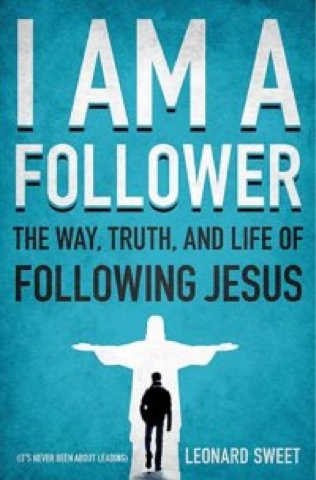 I recently read a copy of Leonard Sweet's book "I Am a Follower," thanks to the BookSneeze program. They give you books for free, so long as you write a review on your blog. It's quite a good system. At the beginning I wondered that they were giving books out for free (you only have to have a working blog). But I published a book last year and so far it's sold about 5 copies - at a rate slightly less than one a month. At this point I'd be happy for anyone to be reading it, whether they pay for it or not. And a review is certainly not something to be sneezed at (see what I did there?).
Right, on to the review. From memory I think this is the first of Leonard Sweet's books that I've actually finished, and as I was reading I started to realise why. It's not the content. The content is great. Sweet has been an out-of-the-box thinker for years, and I love hearing his ideas. I love hearing his take on church and Christianity. I'd love to go to a conference with him as the main speaker.
The beauty of a conference is that the speaker condenses everything into a handful of sessions, and then you can discuss it together afterwards. I imagine Leonard Sweet would make a great speaker, and it'd be stimulating discussion. But in a book? I feel like he got the main points across in the first few chapters of the book, and they were brilliant. But the book has over 50 chapters. Thankfully short chapters, but still. 50 different thoughts is a lot, and there was a lot of repetition. It's like Sweet did a conference and then included transcripts of all the discussion groups afterwards, looking at the topic from every possible angle. It was too much.
I do think it's a good book, and I think he has some great stuff to say about leadership, church and following Jesus. There are a lot of great quotes in here. I wholeheartedly recommend you put aside some time to read this book. A lot of time.
Like maybe a year.
Wednesday, 12 December 2012
Our Church: We're All Pastors
Something else we care about....
In our church, we acknowledge that some have more experience or knowledge in certain areas, but when it comes to Jesus, everyone has a valuable voice in the conversation.
There is no one preacher. We all teach each other.
There is no one person responsible for pastoral care. We all look out for each other.
No one person is especially "anointed," or has a more direct line to God, or has more authority in the group. Power is dispersed among us all. God can teach through anyone, even the kids.
In our church, we acknowledge that some have more experience or knowledge in certain areas, but when it comes to Jesus, everyone has a valuable voice in the conversation.
There is no one preacher. We all teach each other.
There is no one person responsible for pastoral care. We all look out for each other.
No one person is especially "anointed," or has a more direct line to God, or has more authority in the group. Power is dispersed among us all. God can teach through anyone, even the kids.
Saturday, 24 November 2012
Our Church: Names
No mission without names
The second thing we care about (and these are in no particular order) is "No mission without names." We're working with actual people, not hypothetical ones.
Our church and mission adapts to suit the actual people we connect with. Our church changes depending on who is in it, because each person brings something different - ideas, gifts, interests, life situation, outside connections, life story etc.
For example, we don't have a children's ministry. We just try to help Lily become more like Jesus, and Isla, and Abby etc – the same as we do for each of us in the church. There are some things we do specifically with all the kids together, but overall it's different for each of them, they're all at different stages, and we acknowledge that parents are the most important spiritual influence in their children's lives. We don't officially have a children's ministry as such. We try to support the parents in whatever ways we can.
The second thing we care about (and these are in no particular order) is "No mission without names." We're working with actual people, not hypothetical ones.
Our church and mission adapts to suit the actual people we connect with. Our church changes depending on who is in it, because each person brings something different - ideas, gifts, interests, life situation, outside connections, life story etc.
For example, we don't have a children's ministry. We just try to help Lily become more like Jesus, and Isla, and Abby etc – the same as we do for each of us in the church. There are some things we do specifically with all the kids together, but overall it's different for each of them, they're all at different stages, and we acknowledge that parents are the most important spiritual influence in their children's lives. We don't officially have a children's ministry as such. We try to support the parents in whatever ways we can.
Tuesday, 6 November 2012
Our Church: Monks, Cheerleaders and Activists
1. Monks, Cheerleaders and Activists
We are committed to helping each individual – adults and children – to be a monk, cheerleader and activist in their life.
Monks. Learning about who God is, his words, his way, his story, what he cares about, and who we are in relation to him. This means worship, prayer, reading the Bible, living like Jesus, etc.
Cheerleaders. Encouraging, supporting, praying, looking out for each other and the people we're connected to – in the bad and the good times.
Activists. Figuring out where each of us can make a positive difference in the world, to help bring Jesus' kingdom of heaven to earth.
More to come!
Sunday, 21 October 2012
Sunday Morning Evangelism
It's worth posting this one again...
"Sunday morning in church is the one place where evangelism cannot take place in our generation because the lost are not there..." - from "Everyday Church," by Tim Chester and Steve Timmis
Wednesday, 17 October 2012
Review: Why Men Hate Going to Church
David Murrow begins this book with the harsh reality that most churches have fewer men than women, and because of this and various other reasons, church has gradually grown to reflect this. Church has largely become a place where women are comfortable and men are not. And thus begins a downward spiral. Church becomes slowly more feminine in its style because of the higher proportion of women, and as it does, men become less comfortable and men's numbers dwindle, which makes the church more feminine, which makes....
Although the descriptions of men/women seem a little exaggerated (not every man likes baseball and chainsaws) there are lots of helpful insights, advice on how to do church with men in mind, ways we are unintentionally marginalising men, and other practical tips.
I learnt a lot from this book. I'd really recommend it to any church leader. Church needs men. Especially now. It was Jesus' simplest strategy, and as Murrow points out: where there are men, the women, children and young people will want to be there too.
An interesting tidbit from the book to finish on (there's loads of research to back it all up)...
• When Mom is a regular churchgoer but Dad attends infrequently (or never), just 2 to 3 percent of their kids go on to become regular churchgoers.
• When both Mom and Dad attend church regularly, 33 percent of kids grow up as regular attendees.
• Here’s the shocker: when Dad is faithful but Mom never attends, 44 percent of the kids end up as regular churchgoers. This is the highest outcome of any scenario.
Read that again.

Although the descriptions of men/women seem a little exaggerated (not every man likes baseball and chainsaws) there are lots of helpful insights, advice on how to do church with men in mind, ways we are unintentionally marginalising men, and other practical tips.
I learnt a lot from this book. I'd really recommend it to any church leader. Church needs men. Especially now. It was Jesus' simplest strategy, and as Murrow points out: where there are men, the women, children and young people will want to be there too.
An interesting tidbit from the book to finish on (there's loads of research to back it all up)...
• When Mom is a regular churchgoer but Dad attends infrequently (or never), just 2 to 3 percent of their kids go on to become regular churchgoers.
• When both Mom and Dad attend church regularly, 33 percent of kids grow up as regular attendees.
• Here’s the shocker: when Dad is faithful but Mom never attends, 44 percent of the kids end up as regular churchgoers. This is the highest outcome of any scenario.
Read that again.
Subscribe to:
Posts (Atom)